Nakul Juniper Springs

Anchor / Background Plants (Tall, 3–5 ft+)
Firebush (Hamelia patens) – 3 plants (Placed toward the back in a triangle, they’ll fill in wide and provide the red/orange height.)
Croton ‘Petra’ – 3 plants (Clustered toward the center for colorful foliage contrast. They’ll stay around 3 ft wide and tall.)
Mid-Layer (2–3 ft tall)
Dwarf Ixora (red) – 6 plants (Planted in groups in the middle/front, they create a solid block of bloom color.)
Blue Porter weed – 4 plants (Low, slightly sprawling, works best in the corners or edges to soften the transition to turf.)
Accent / Edging Plants (Low, 1–2 ft)
Society Garlic – 5–6 plants (Used along the border as a grassy textural edge with lavender bloom accents.)
Total Plant Count
Firebush – 3
Croton – 3
Ixora – 6
Porter weed – 4
Society Garlic – 6
= ~22 plants total
Tropical Oasis
A bold, resort-style planting that evokes South Florida with big textures and saturated colors.
Plants Used:
-
Firebush (Hamelia patens) – red/orange tubular flowers, hummingbird magnet.
-
Blue Porterweed (Stachytarpheta jamaicensis) – constant violet blooms, low and spreading.
-
Croton ‘Petra’ – colorful foliage (red, gold, green).
-
Dwarf Ixora (Ixora coccinea ‘Dwarf Red’) – compact red blooms.
-
Society Garlic (Tulbaghia violacea) – clumping grasslike leaves with lavender flowers.

Soft Serenity
Calming and elegant with pastel tones, good for homeowners who prefer subtlety over bold color.
Plants Used:
-
Blue Daze (Evolvulus glomeratus) – trailing, sky-blue flowers.
-
White Pentas – clean, long-blooming stars.
-
Silver Buttonwood (dwarf form) – silvery leaves for texture.
-
Lavender Pentas or Angelonia (white/lavender) – vertical bloom accents.
-
African Iris (Dietes bicolor) – upright foliage, soft cream/yellow flowers.


Anchor / Structure Plants (3–5 ft)
-
Silver Buttonwood (dwarf form) – 1 plant
(Placed near the back-center as the silvery focal point and structural anchor.)
Mid-Layer Plants (2–3 ft tall)
-
African Iris (Dietes bicolor) – 5 plants
(Planted toward the right/back edge for upright grassy foliage and soft cream blooms.) -
Lavender Angelonia – 6 plants
(Grouped behind and alongside the buttonwood to give vertical lavender spires.)
Mass Color Plants (1.5–2 ft tall)
-
White Pentas – 6 plants
(Arranged in clusters for large blocks of white star-blooms, providing calm balance.) -
Blue Daze (Evolvulus) – 6–8 plants
(Trailing along the front edge and corners, spilling slightly into the bed for softness.)
Total Plant Count
-
Silver Buttonwood – 1
-
African Iris – 5
-
Angelonia – 6
-
White Pentas – 6
-
Blue Daze – 6–8
= 24–26 plants total

Anchor / Structure Plants (3–6 ft)
-
Coontie Palm (Zamia integrifolia) – 1 plant
(Placed center, evergreen texture, hardy native.) -
Simpson’s Stopper (dwarf form) – 1 plant
(Placed toward the back as a native shrub with white blooms and berries, balances the coontie.)
Mid-Layer Plants (2–3 ft tall)
-
Scarlet Sage (Salvia coccinea) – 5 plants
(Placed toward the back/side edges, strong red pollinator blooms.)
Mass Color Plants (1.5–2 ft tall)
-
Blanket Flower (Gaillardia pulchella) – 8 plants
(Bold red/yellow daisy blooms, filling front/mid mass.) -
Dune Sunflower (Helianthus debilis) – 6 plants
(Sprawling yellow blooms along edges, helps soften corners and spill into turf.)
Total Plant Count
-
Coontie Palm – 1
-
Simpson’s Stopper – 1
-
Scarlet Sage – 5
-
Blanket Flower – 8
-
Dune Sunflower – 6
= ~21 plants total
Florida Natives & Easy Care
A sustainable, low-maintenance native garden emphasizing drought tolerance.
Plants Used:
-
Blanket Flower (Gaillardia pulchella) – red/yellow daisy blooms, thrives in sandy soil.
-
Dune Sunflower (Helianthus debilis) – sprawling native with cheerful yellow flowers.
-
Coontie Palm (Zamia integrifolia) – hardy native cycad, evergreen texture.
-
Simpson’s Stopper (Myrcianthes fragrans, dwarf form) – native shrub with white flowers & berries.
-
Salvia coccinea (Scarlet Sage) – native red flowers, butterfly favorite.
.png)
Trees (4)
Jacaranda (Jacaranda mimosifolia)
-
Description: A subtropical beauty famed for its feathery foliage and abundant violet-blue blossoms in late spring to early summer.
-
Pros for Central Florida: Proven success in Central and South Florida climates, creates a spectacular display with a tropical flair.
-
Considerations: Requires full sun, well-draining soil, and regular moisture. Blooms can create a seasonal mess when they drop—but the show is worth it!
Crape Myrtle (Lagerstroemia indica and hybrids)
The crape myrtle is one of the most popular flowering trees in Central Florida, loved for its long summer bloom season, graceful form, and ease of care. Available in shades of white, pink, lavender, and purple, its clusters of crinkled blossoms resemble delicate crepe paper — hence the name.
-
Size: Mid-size, typically 15–25 feet tall (depending on cultivar), with a rounded, vase-shaped canopy.
-
Foliage: Glossy green leaves that turn shades of red, orange, or yellow in the fall.
-
Bark: Smooth, peeling bark that adds year-round interest, even after the flowers are gone.
-
Bloom Season: Summer through early fall, with blooms lasting 60–90 days — far longer than most flowering trees.
-
Maintenance: Very low-maintenance once established; thrives in full sun and well-draining soil, highly drought-tolerant, and disease-resistant.
-
Best Use: Perfect as a standalone specimen tree, a street tree, or grouped in pairs to frame an entry.


Chickasaw Plum (Prunus angustifolia)
-
Description: A native plum tree that blooms with delicate pink-white flowers in spring, often followed by small fruit.
-
Why It Works: Native to the region, provides early spring floral interest, wildlife value, and fits well into medium-sized garden spaces.

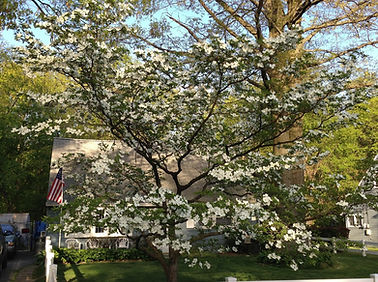
Flowering Dogwood (Cornus florida)
-
Description: A classic deciduous flowering tree featuring showy bracts in white, pink, or red in spring, moderate size, and beautiful fall foliage.
-
Why It Works: Offers elegance and structure, with multi-season beauty. Known for its refined look and beloved charm.